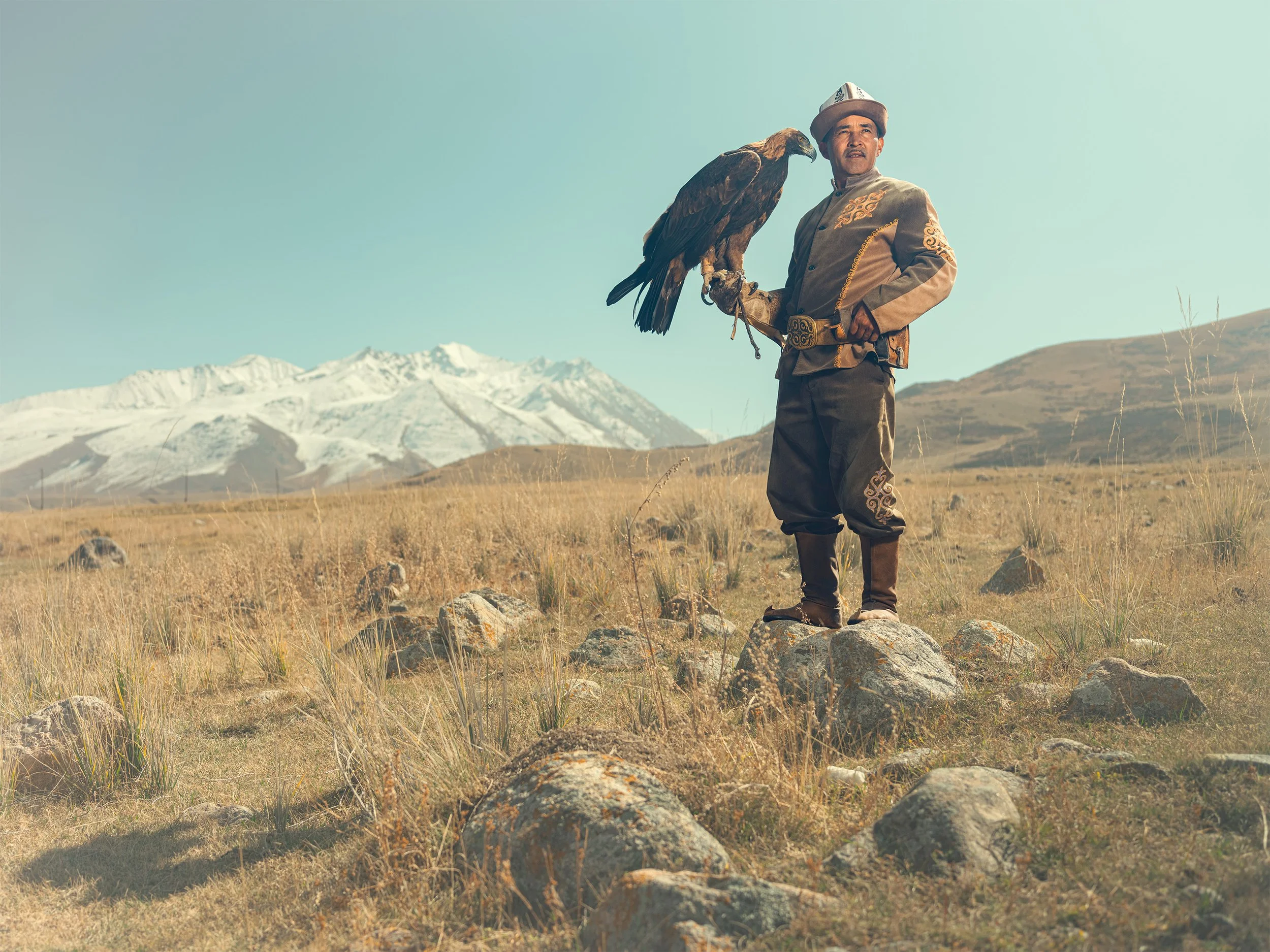
THE EAGLE HUNTERS OF KYRGYzSTAN
By Adam Docker
'I'd first read about the eagle hunters as a teenager in National Geographic. For years I'd imagined what it would be like to stand on the Central Asian steppe with one of these remarkable birds. In 2025, I finally had the opportunity.
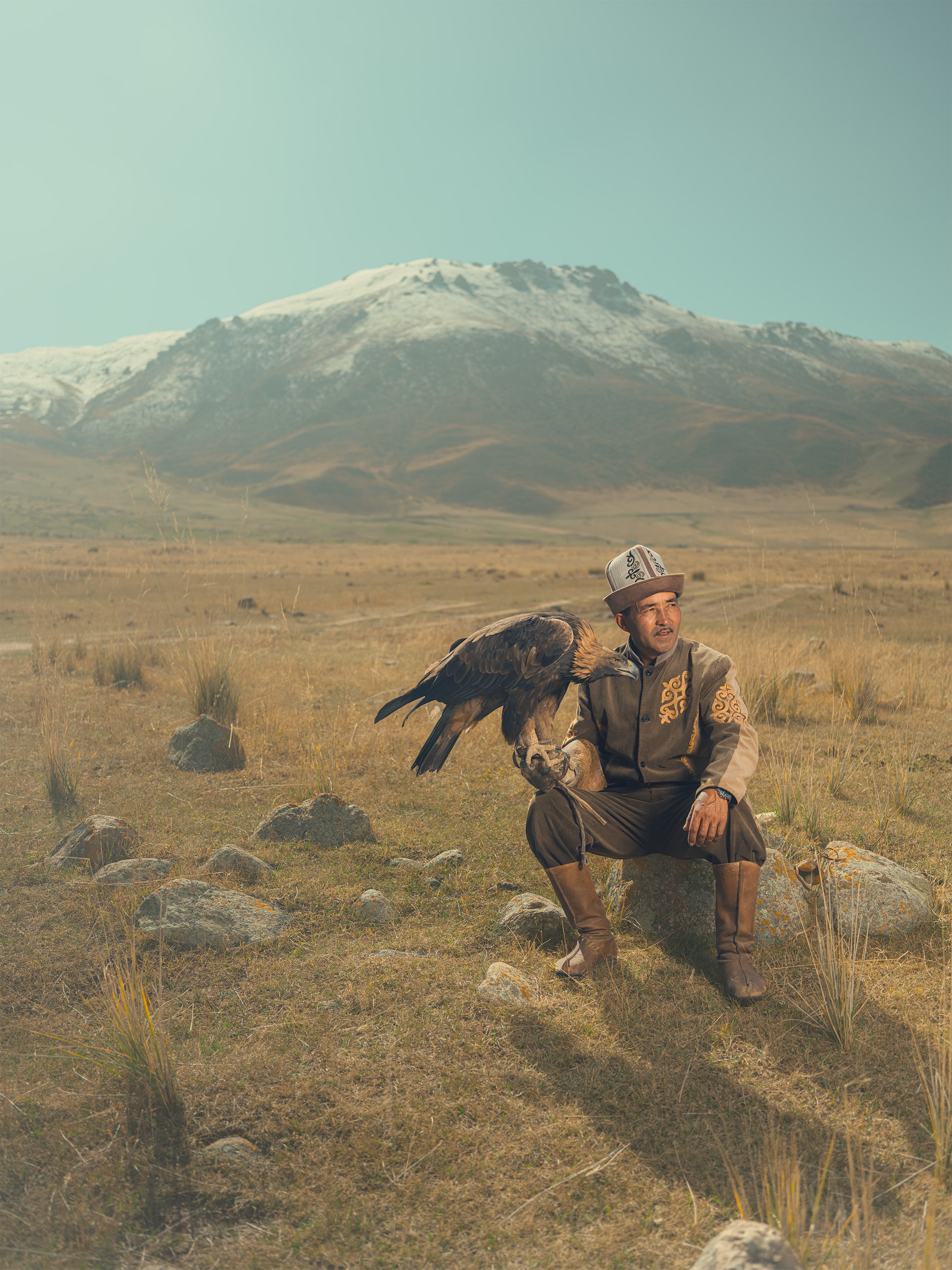
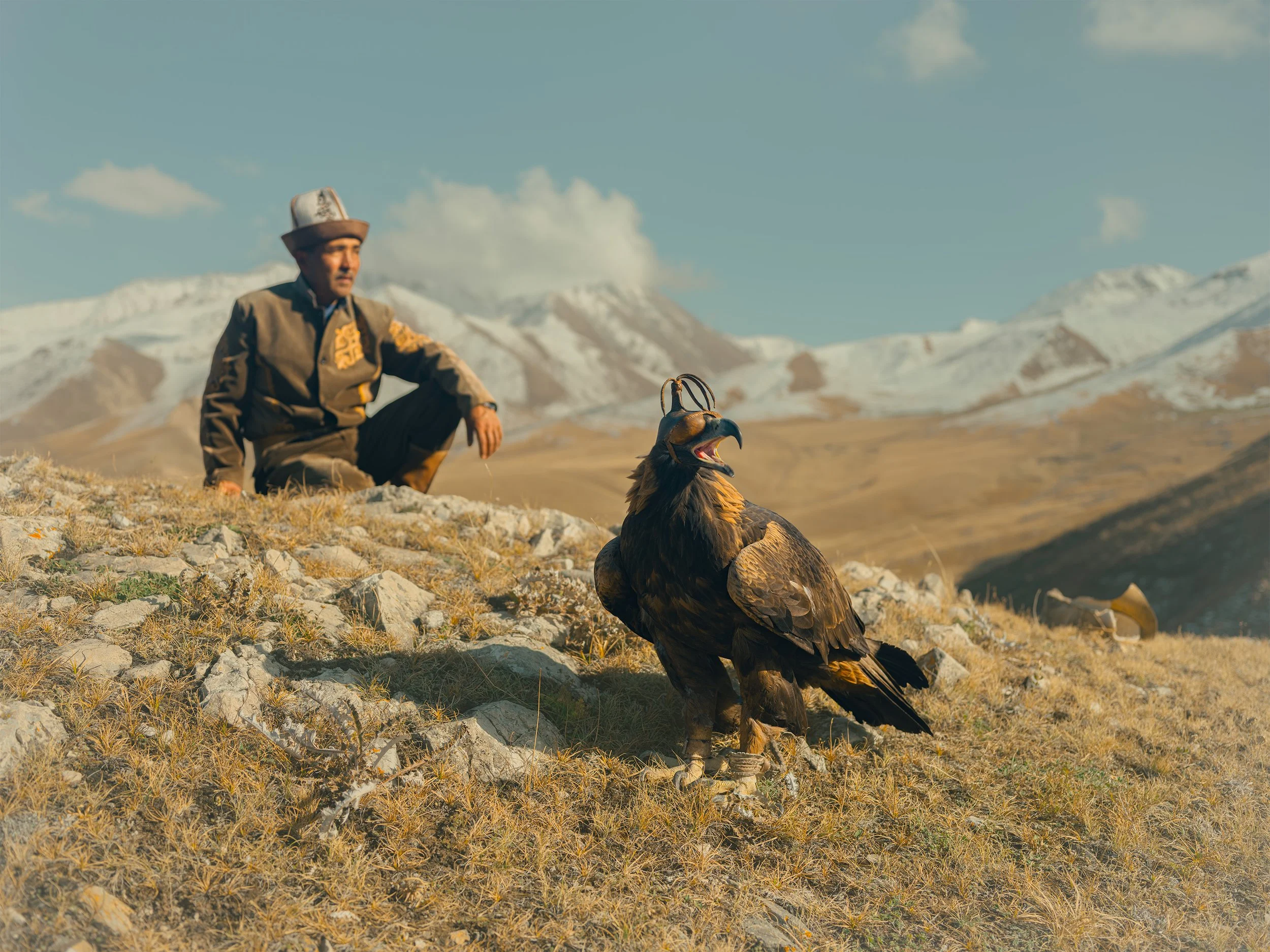
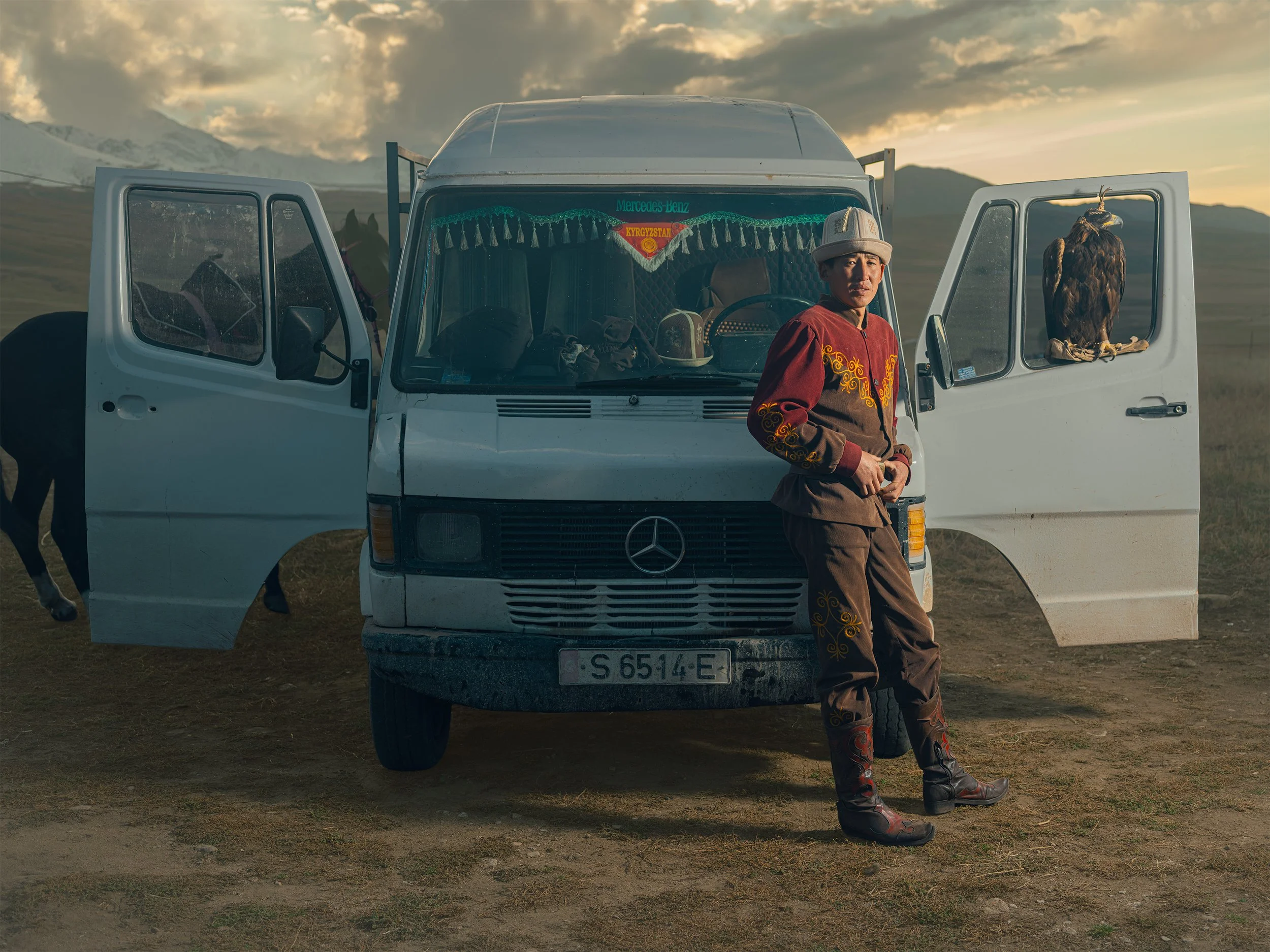
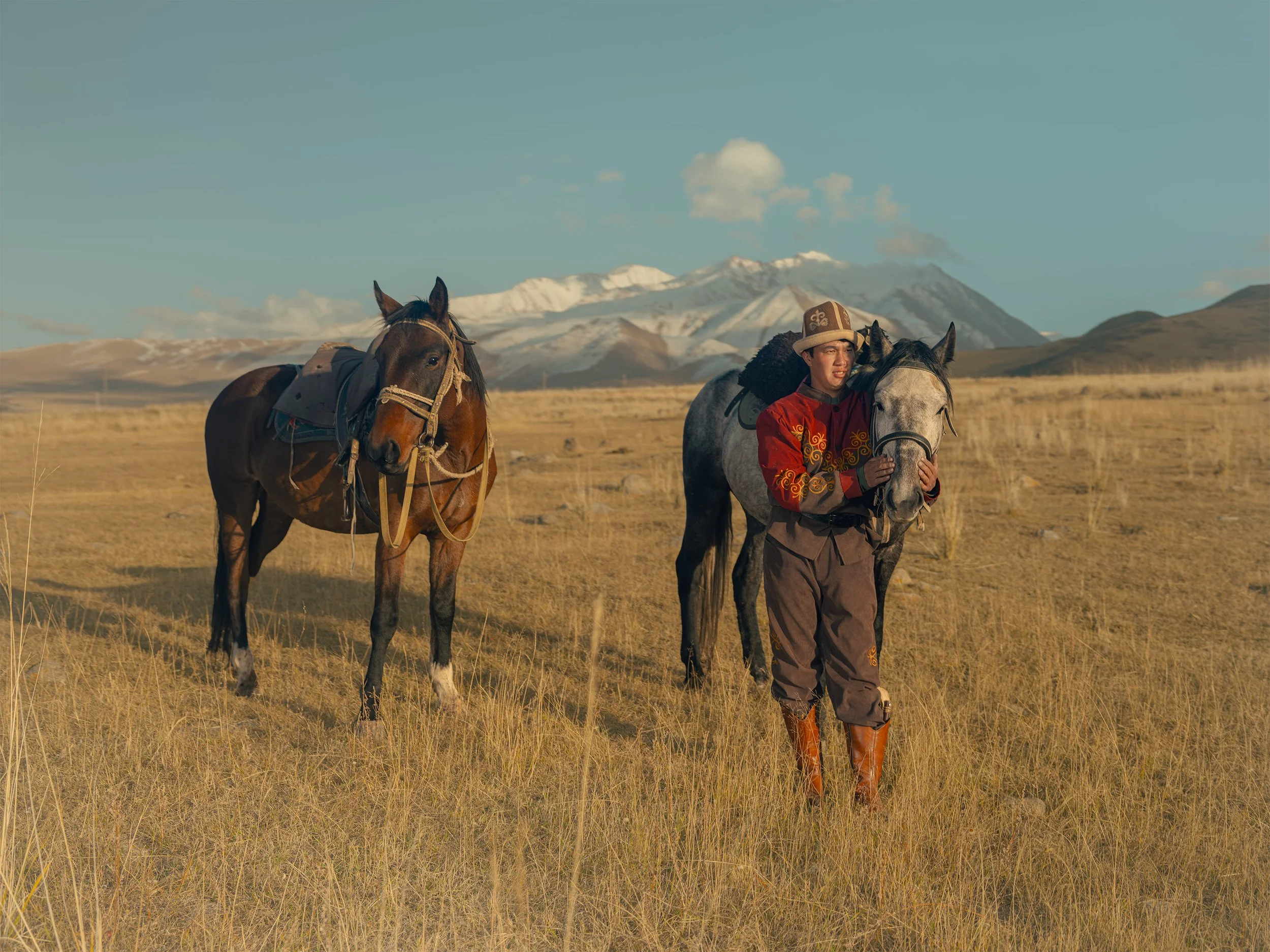
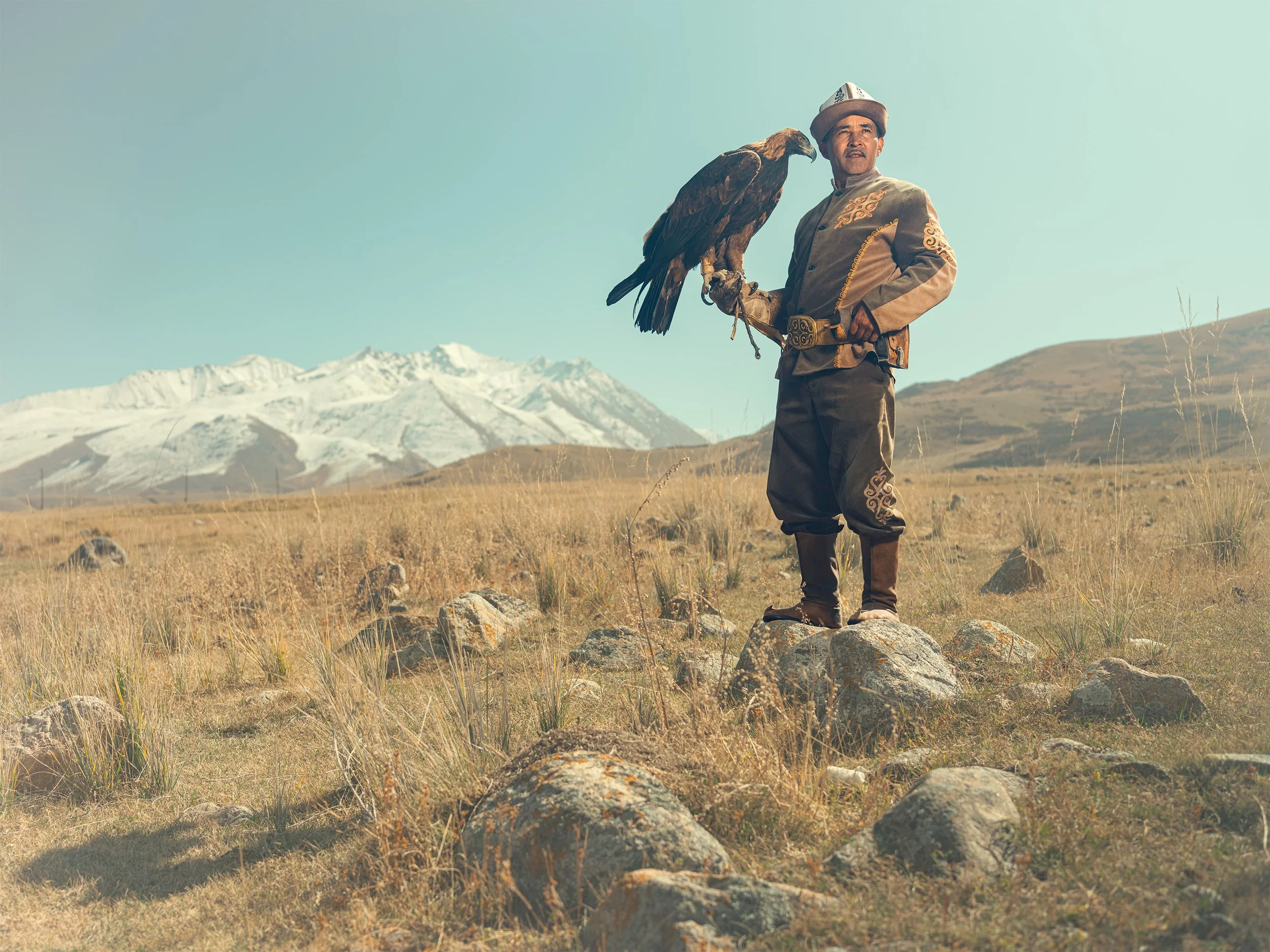
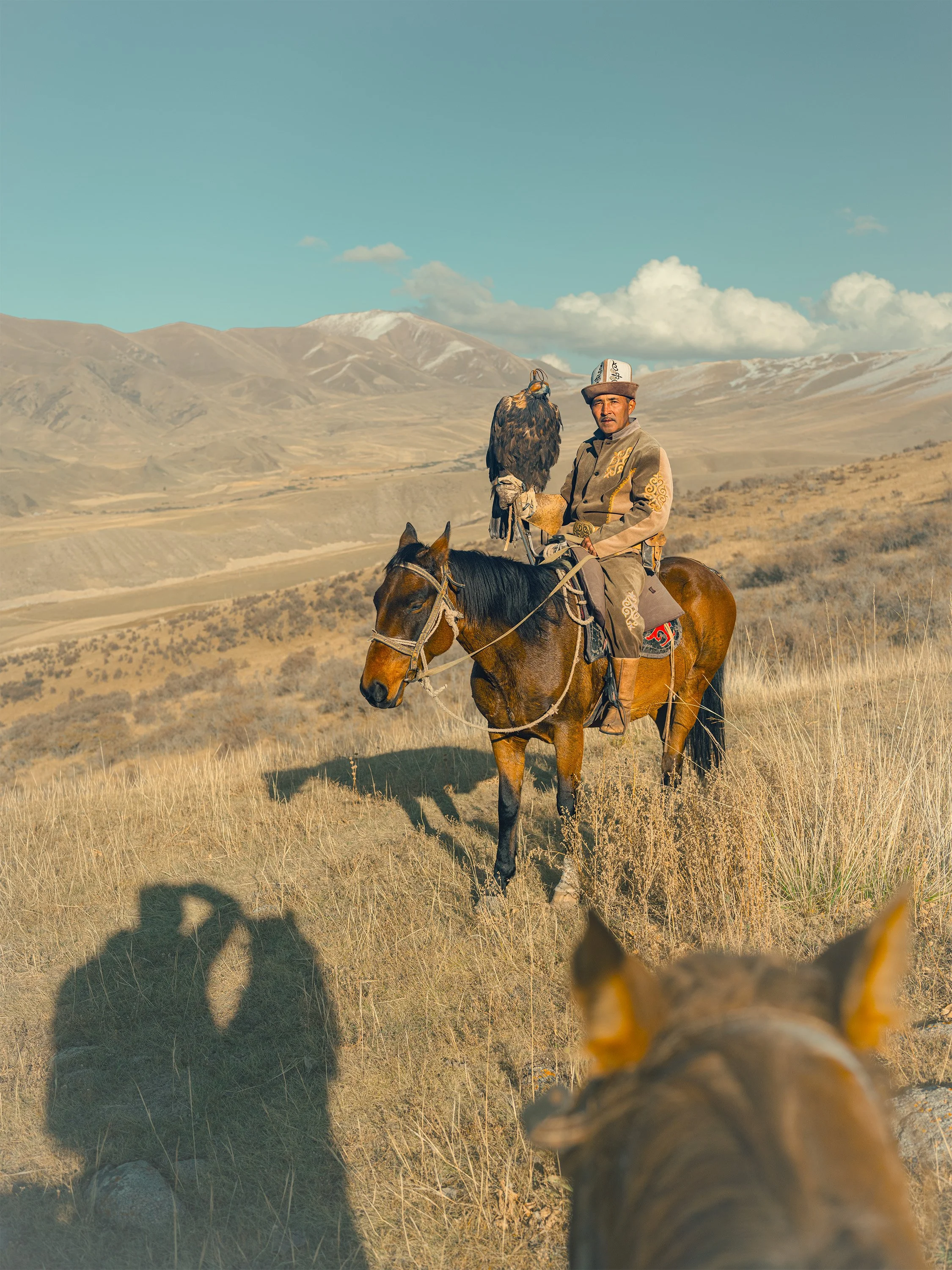
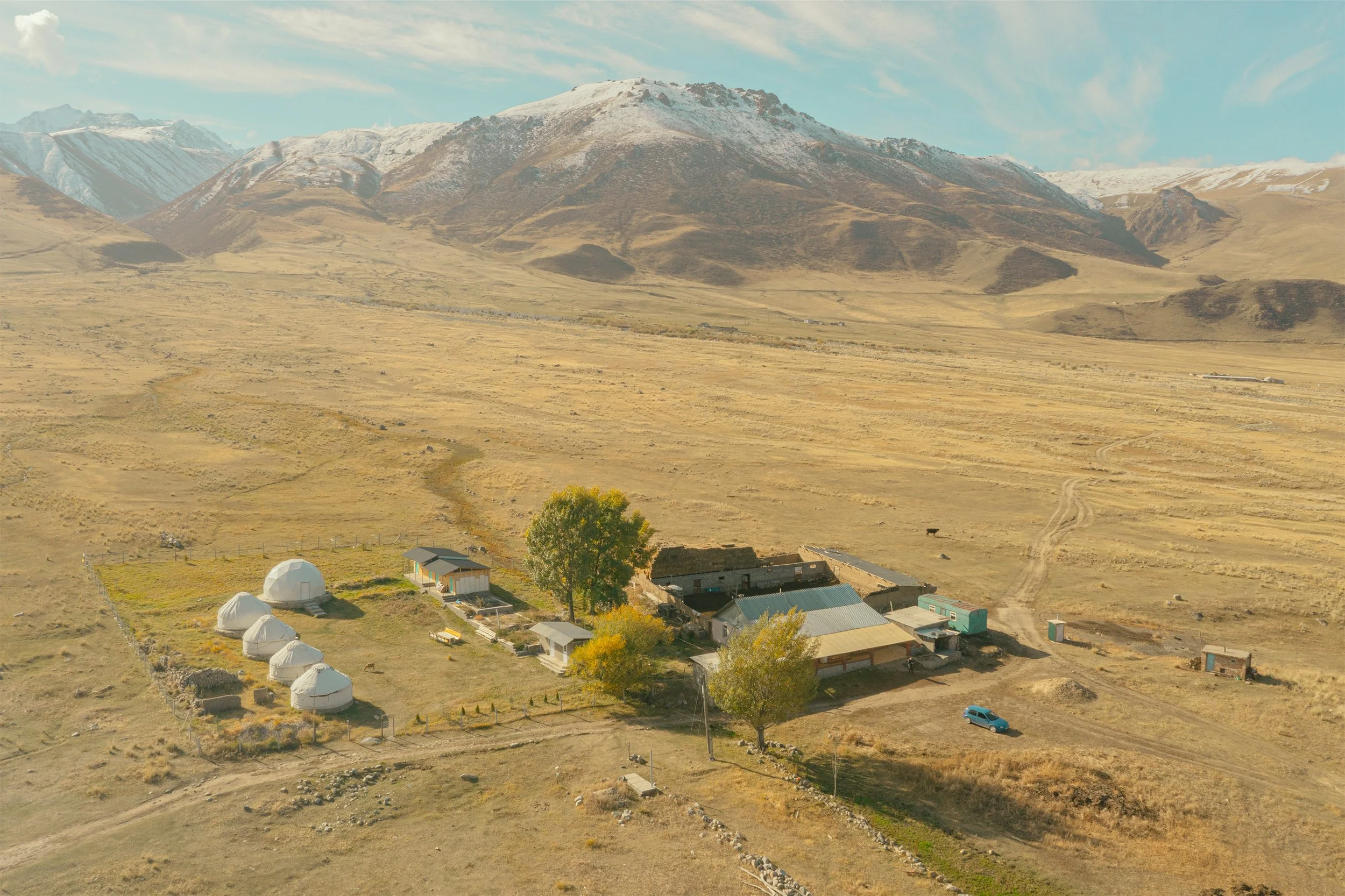
Near the village of Bokonbayevo, on the southern shores of Lake Issyk-Kul, in what felt like the middle of nowhere, I stayed with Aito, an eagle hunter, and his family. Their home sat beneath the mountains, surrounded by open steppe that stretched endlessly toward the horizon. From their yard, a few yurts stood like white shells against the ochre landscape, and behind them the snow-capped peaks of the Tien Shan. It was here that I spent four unforgettable days, immersed in a tradition that has existed for thousands of years.
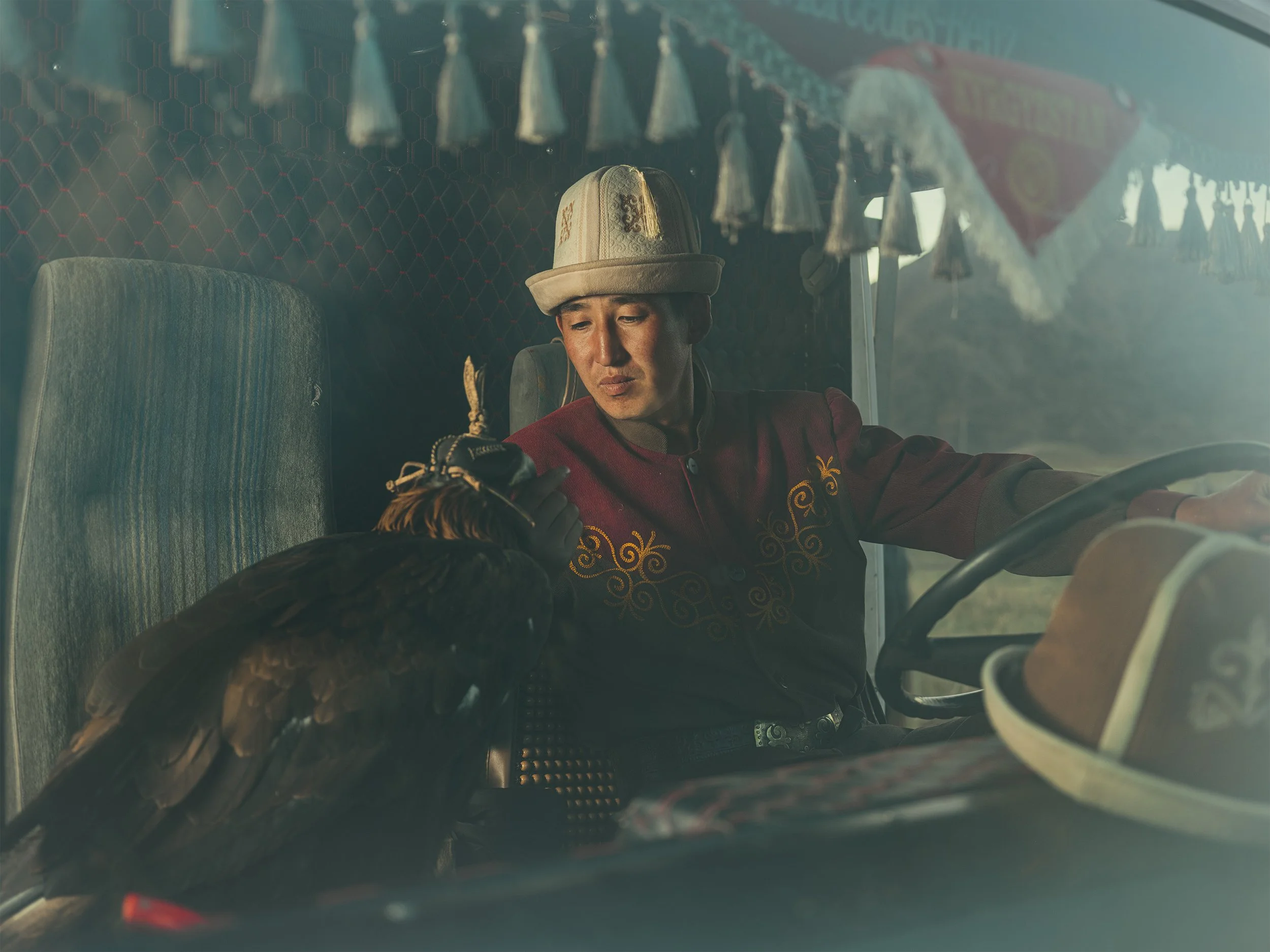
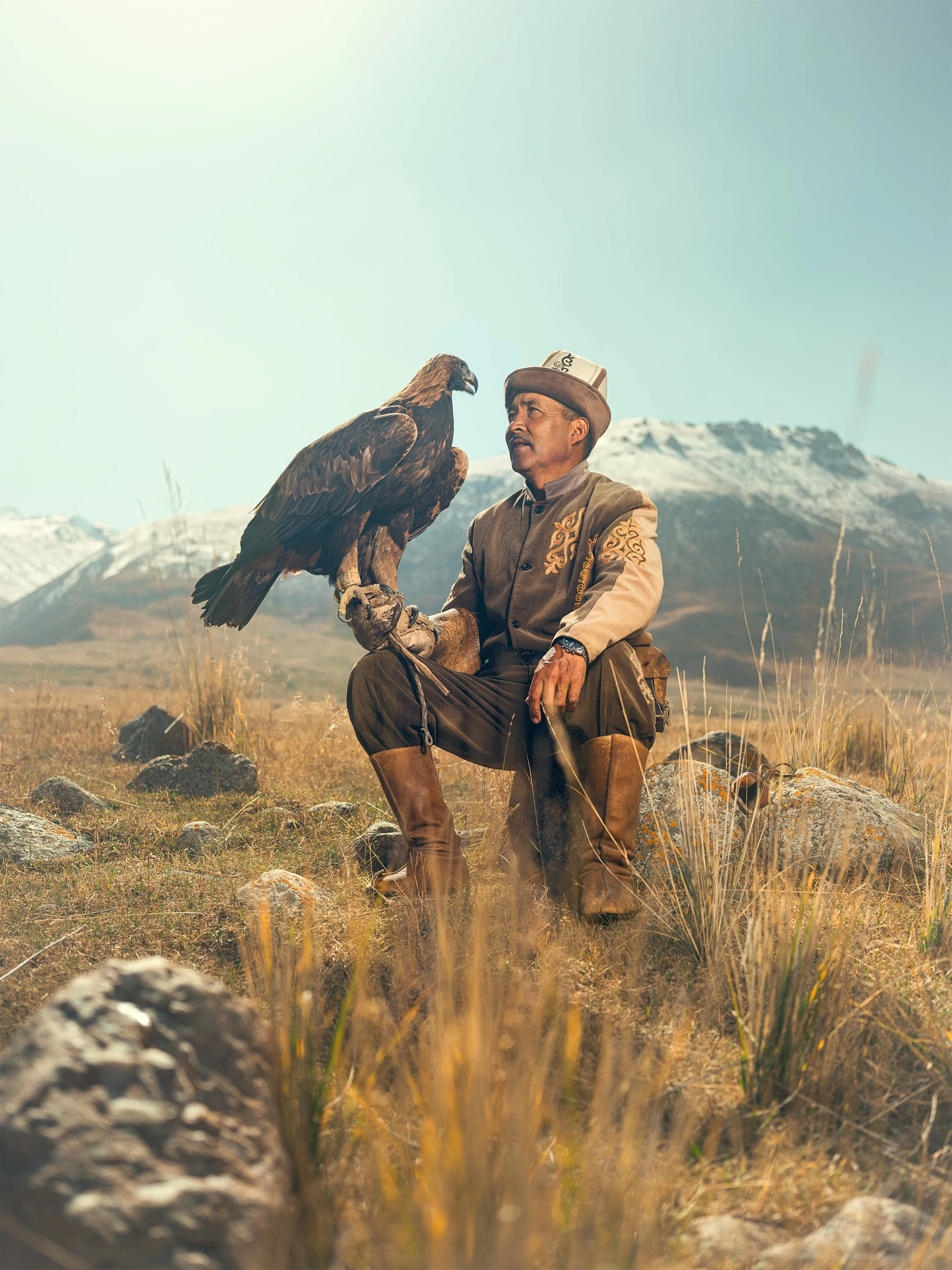
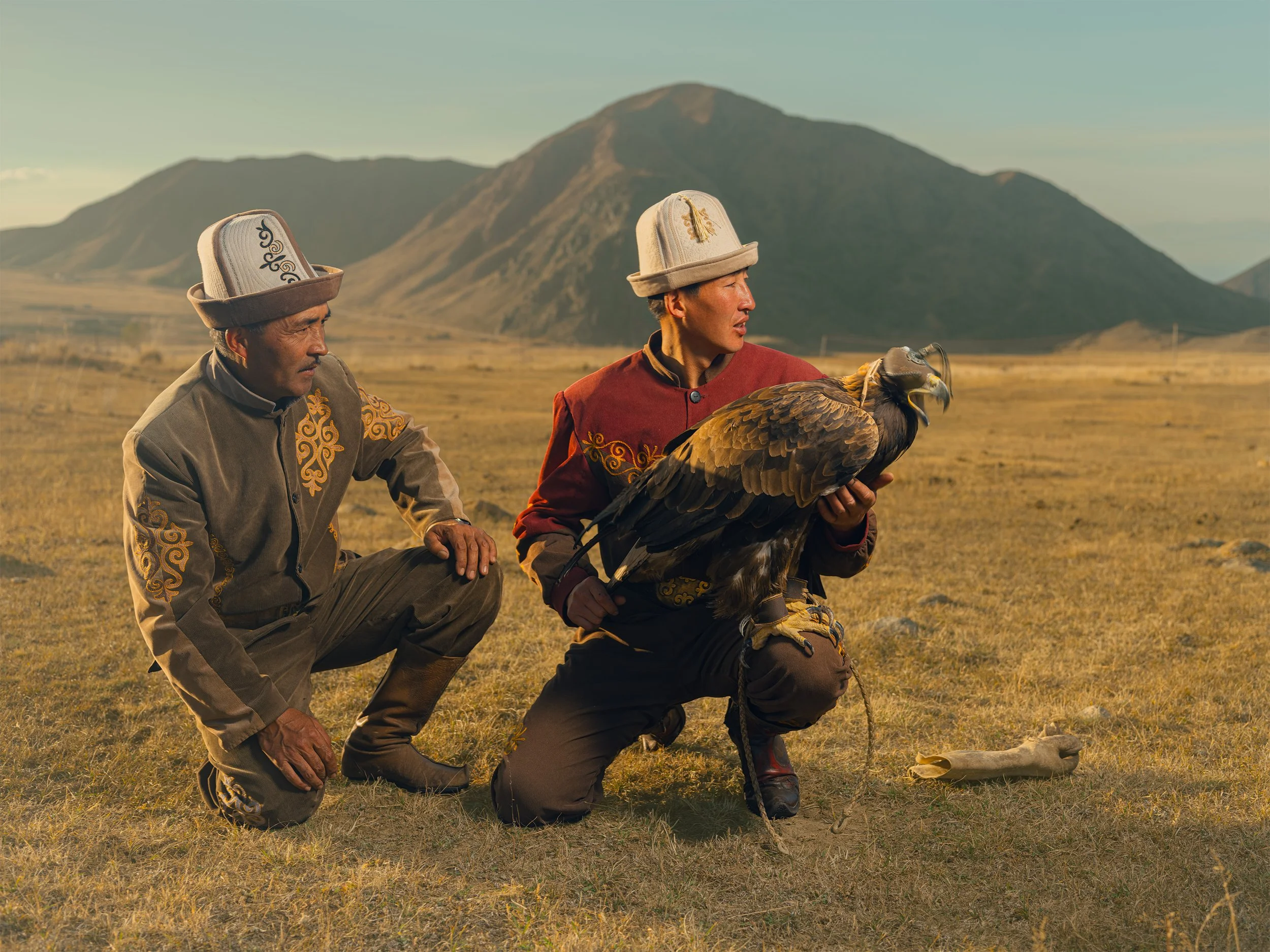
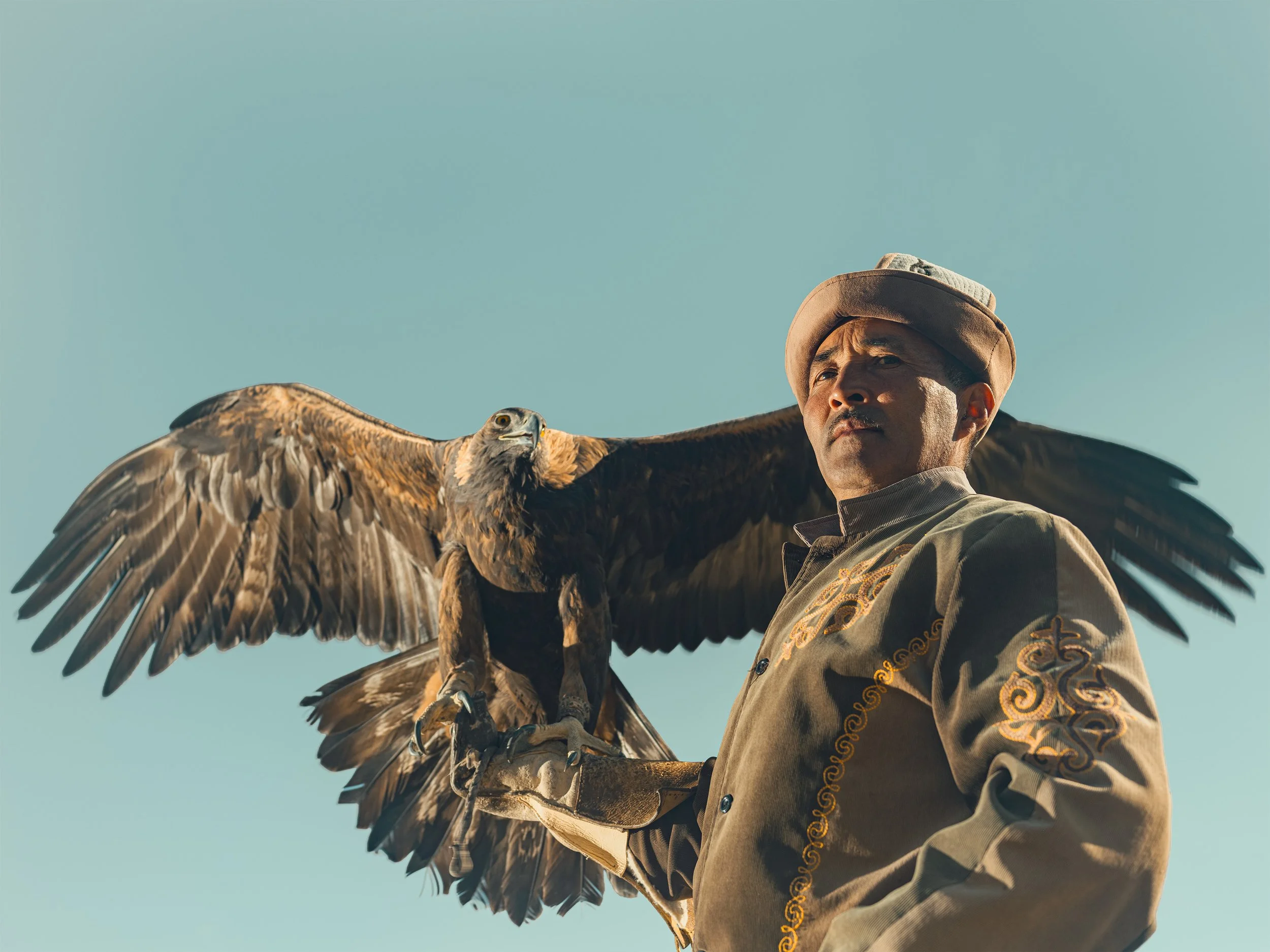
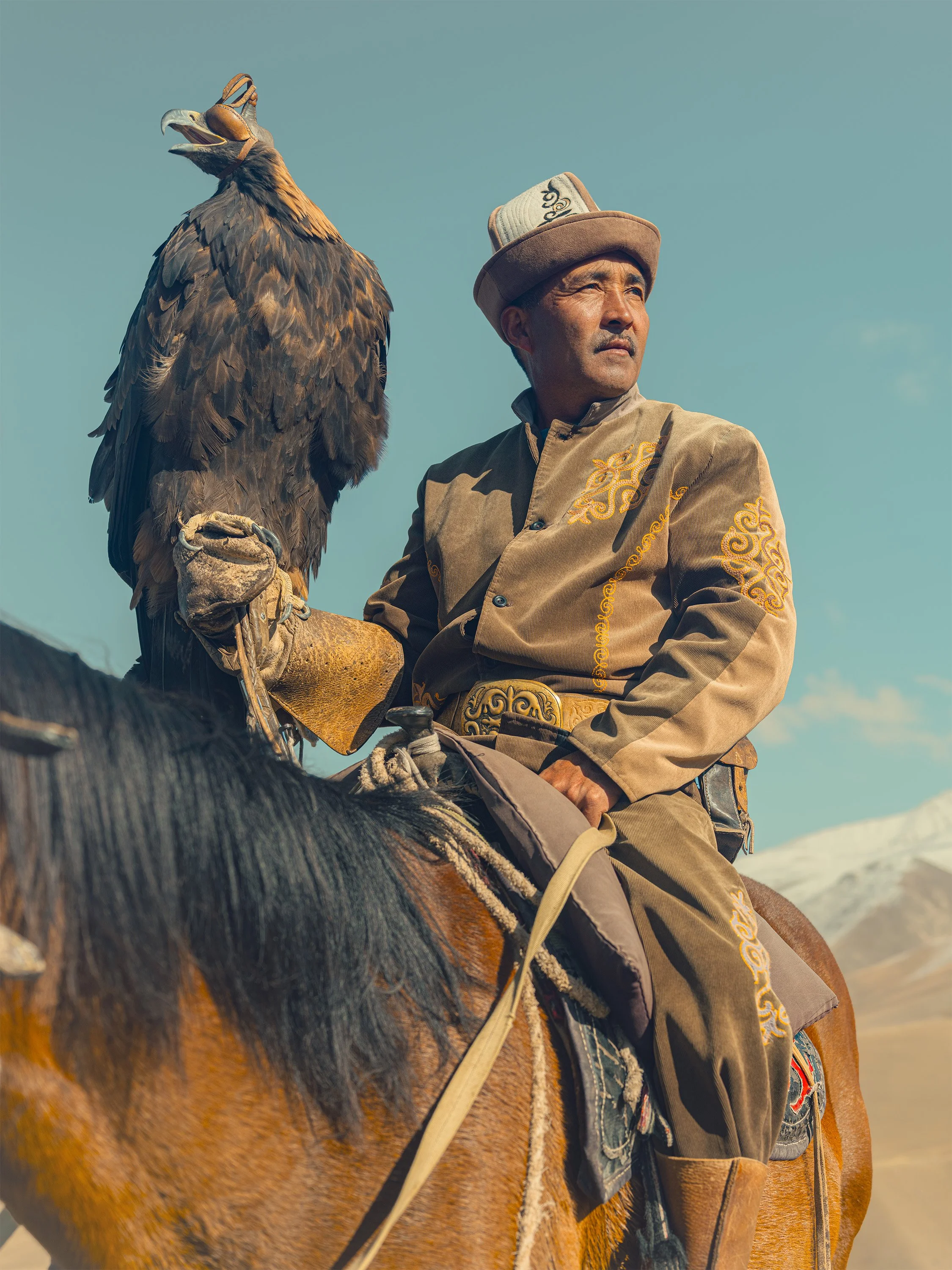
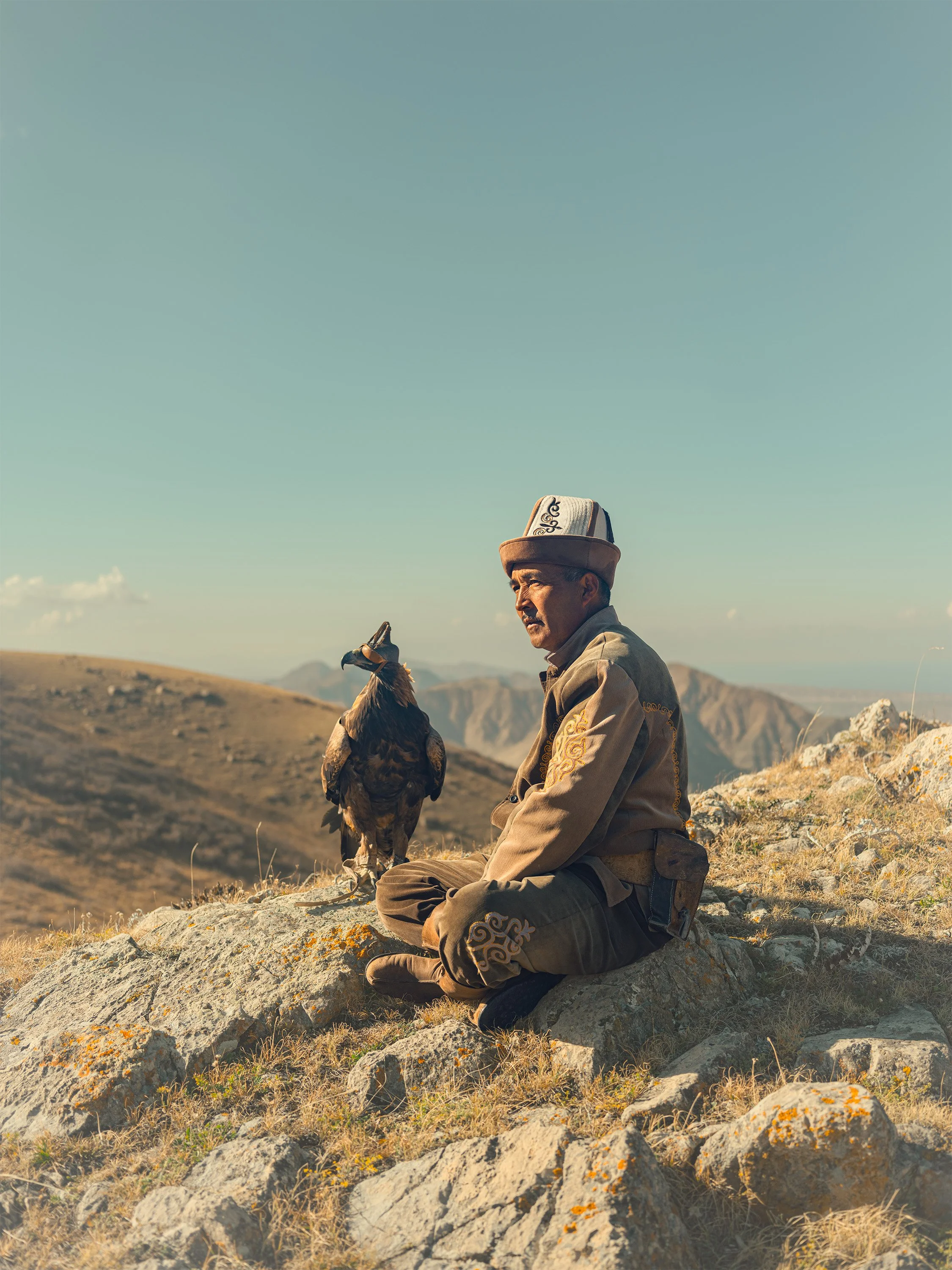
Aito is a fourth-generation eagle hunter, part of a long lineage of men who have carried this knowledge through generations. His eagle, Biren, is thirteen years old, a powerful golden eagle with eyesight that can spot movement from at least two kilometres away. That’s why hunters keep a small leather hood over their eyes when they’re not hunting, without it, the birds would constantly scan the horizon, ready to fly at any sign of prey, eventually exhausting themselves. Eagles like Biren can live for fifty to sixty years, and the bond between hunter and bird is built over decades of mutual trust.”
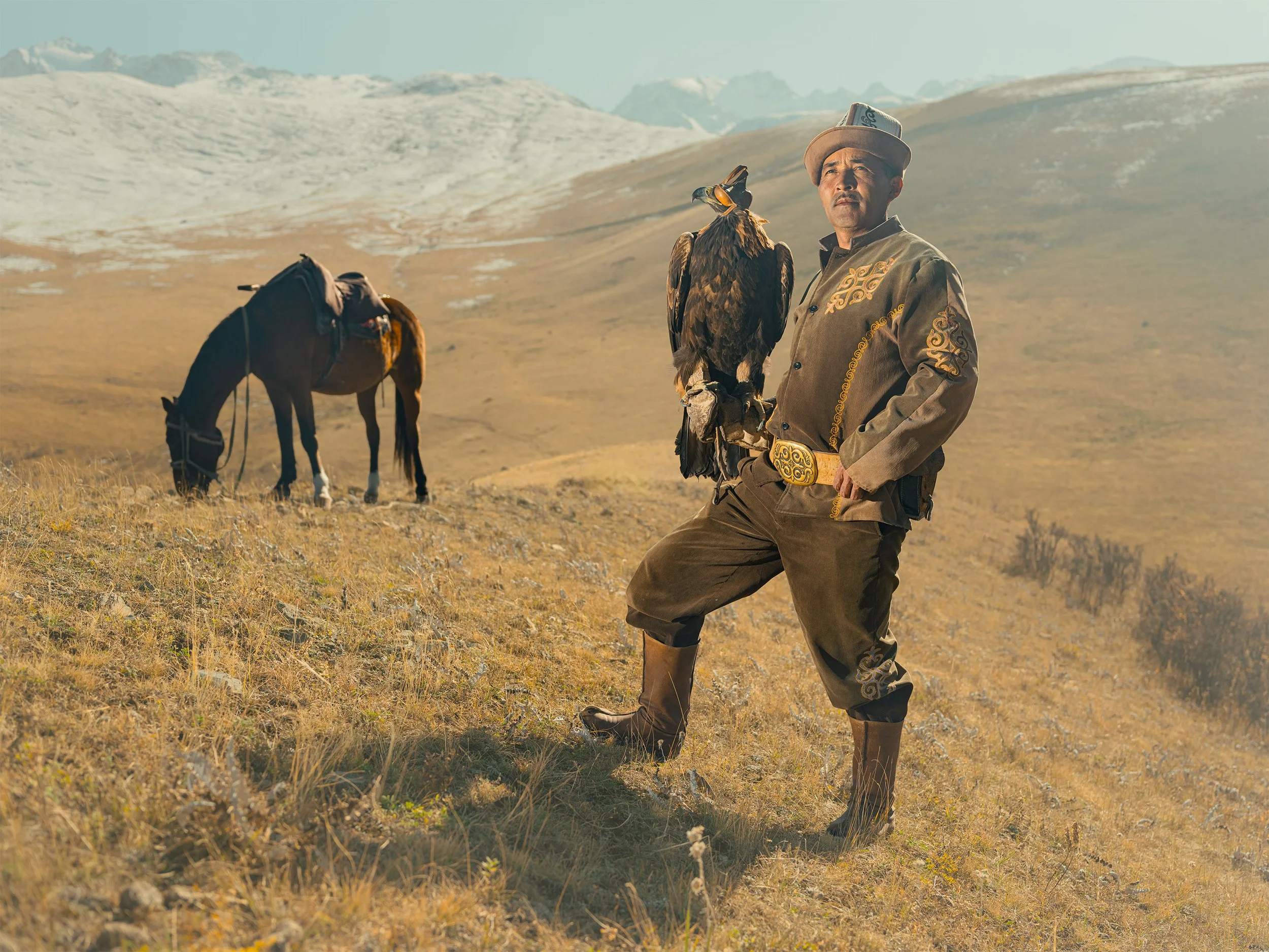
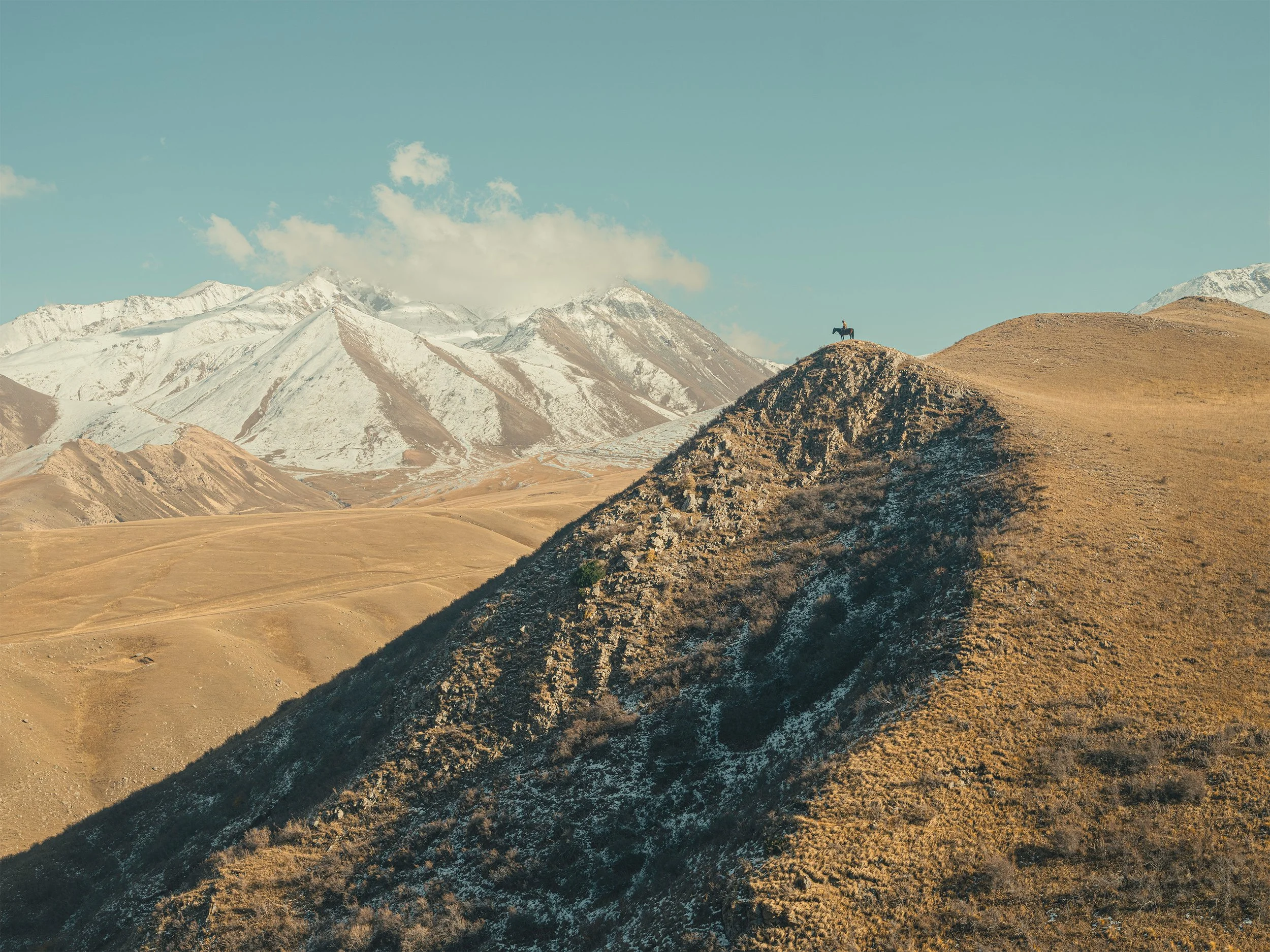
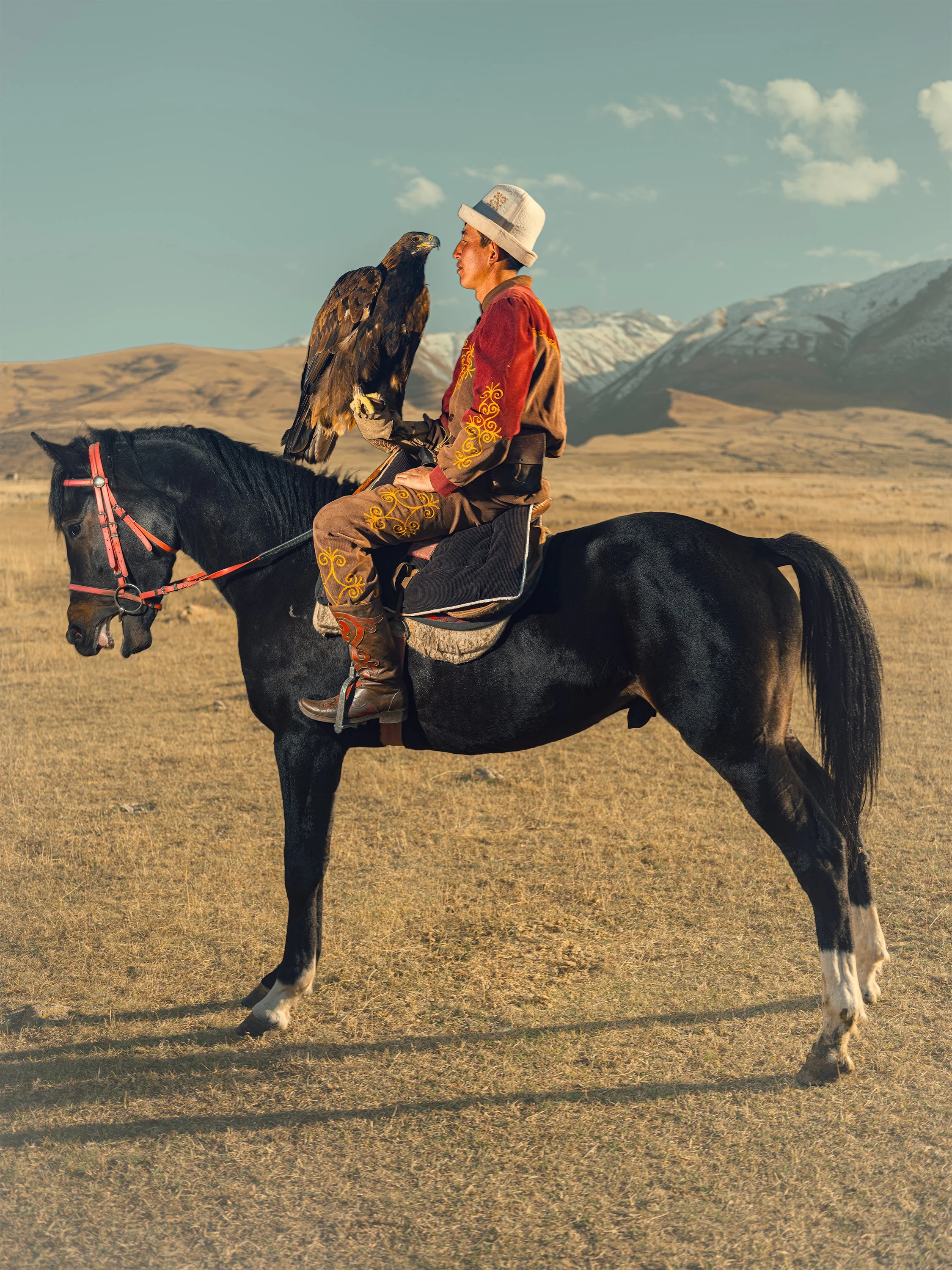
“During my stay, Aito took me trekking on horseback through the high hills above his home. The climb was steep and the air thin, but the view was breathtaking, vast plains broken by streams, wild grass and distant mountains dusted in snow. It felt timeless, untouched by modern life.
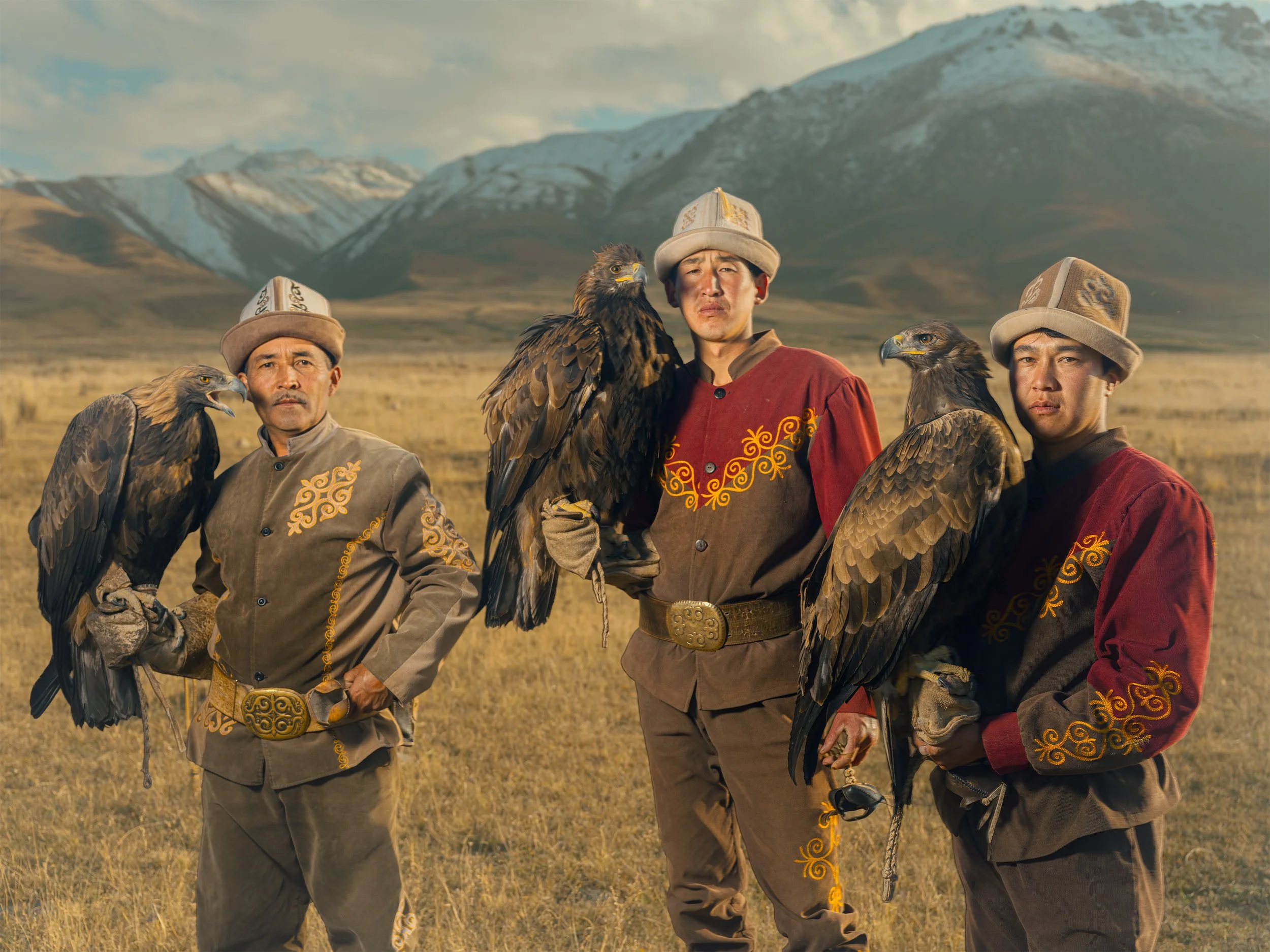
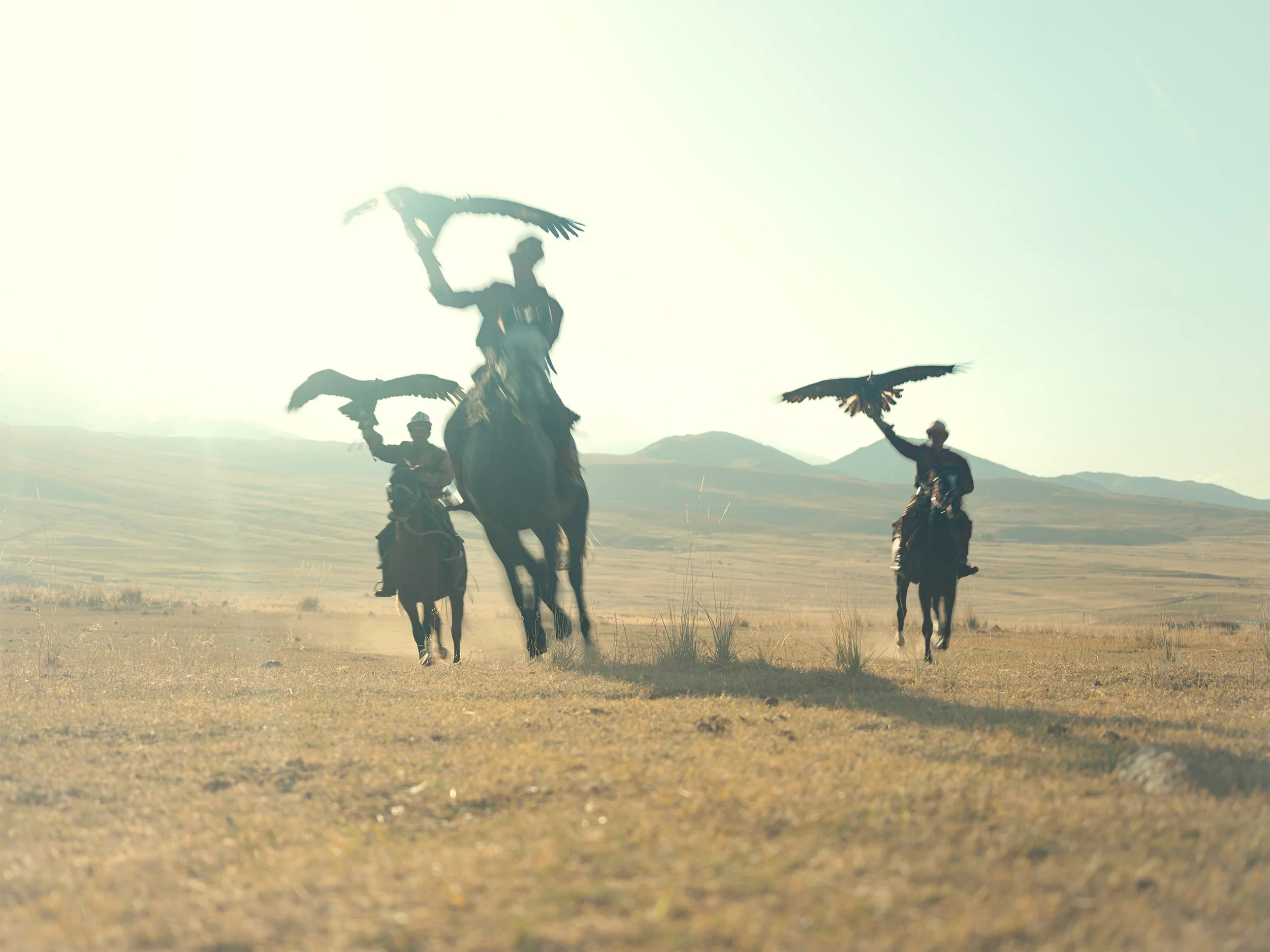
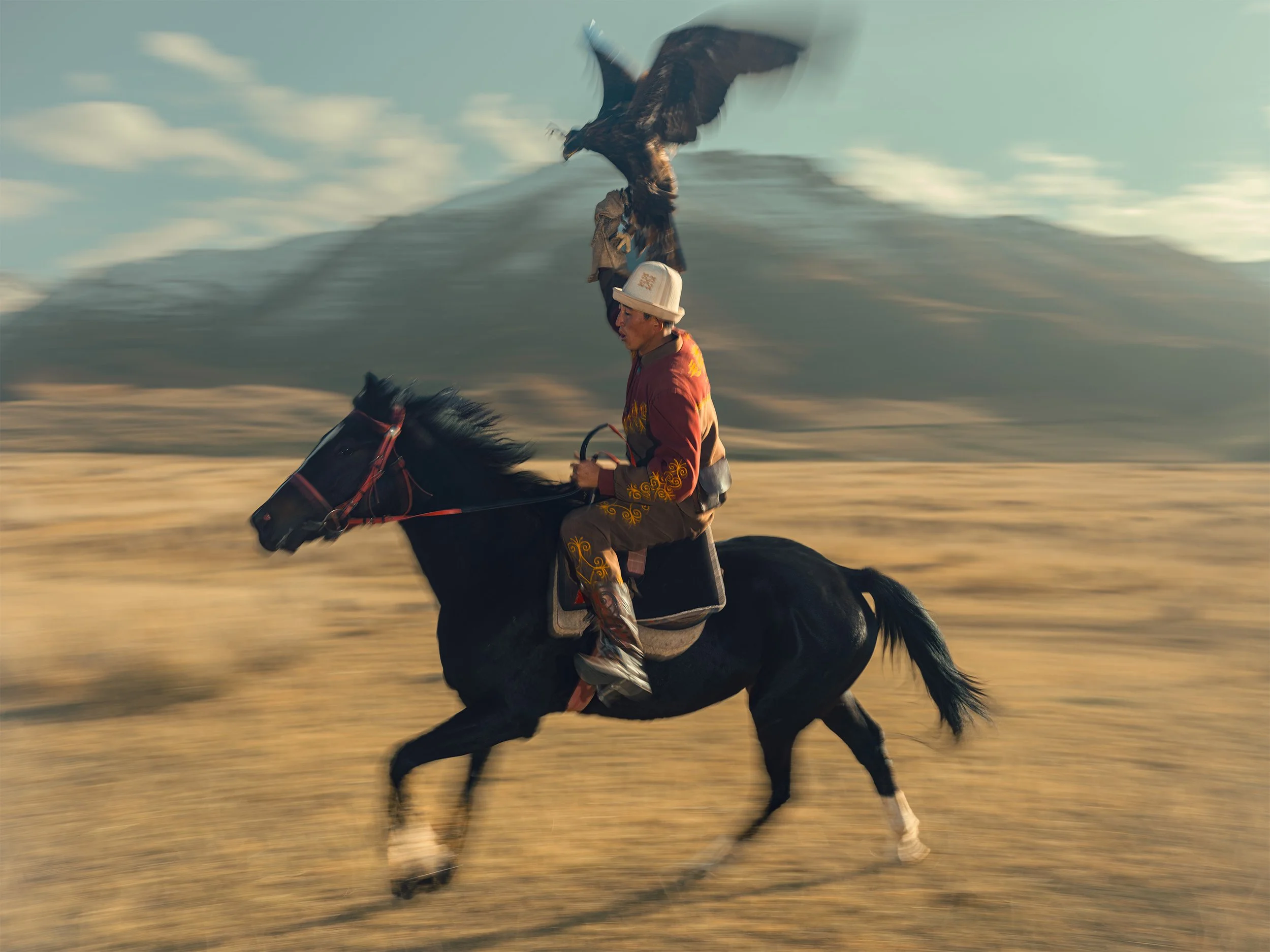
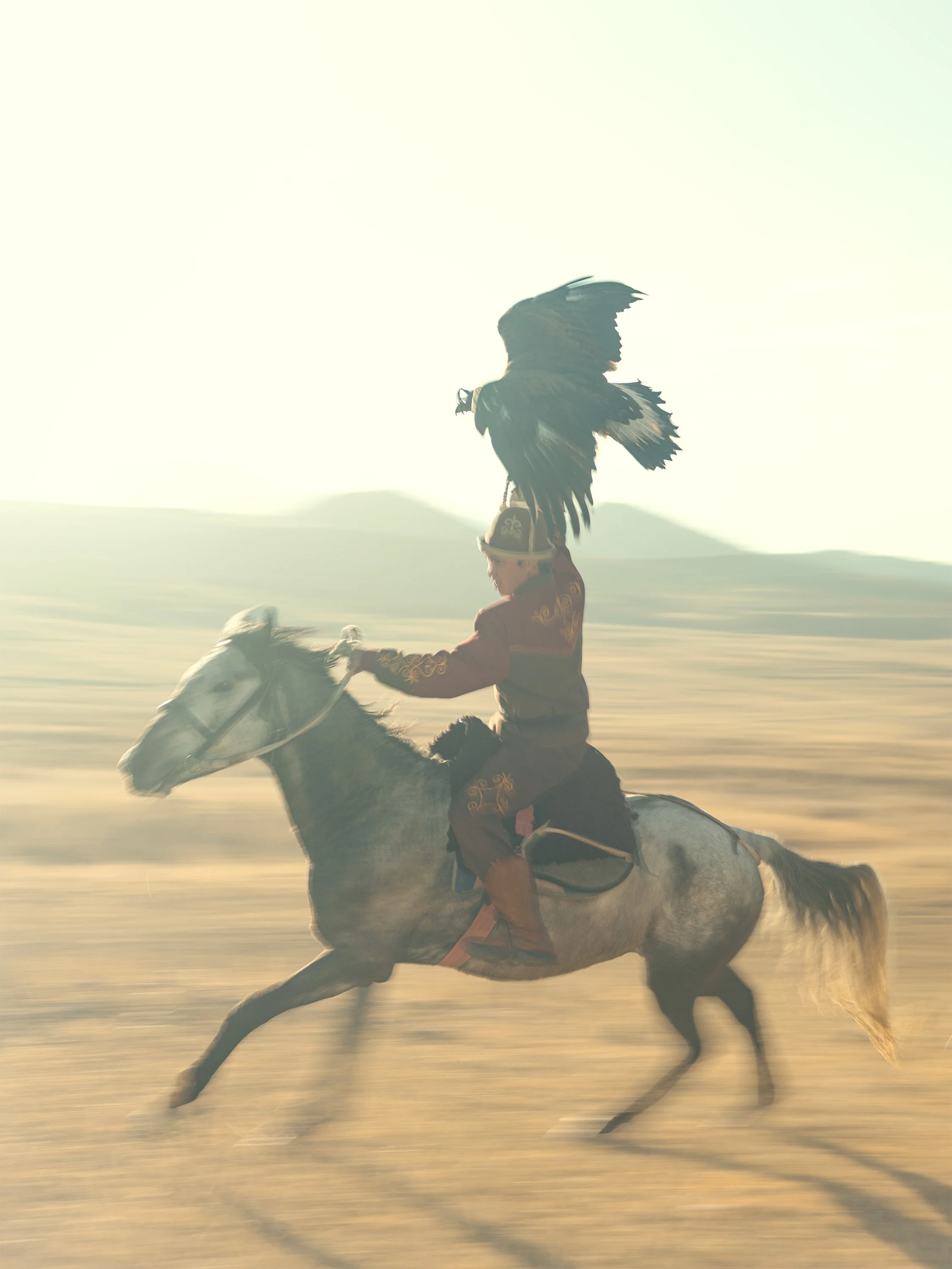
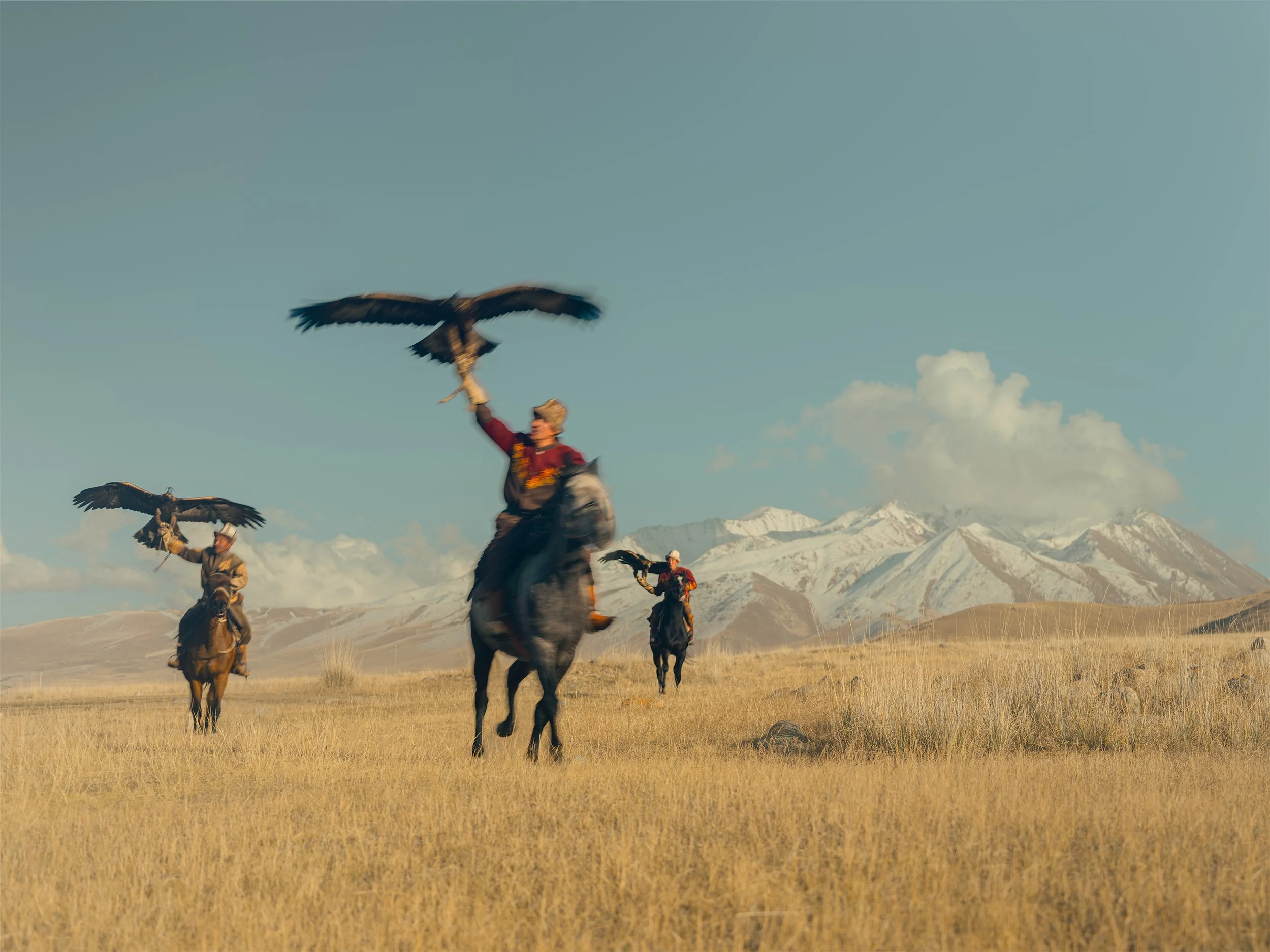
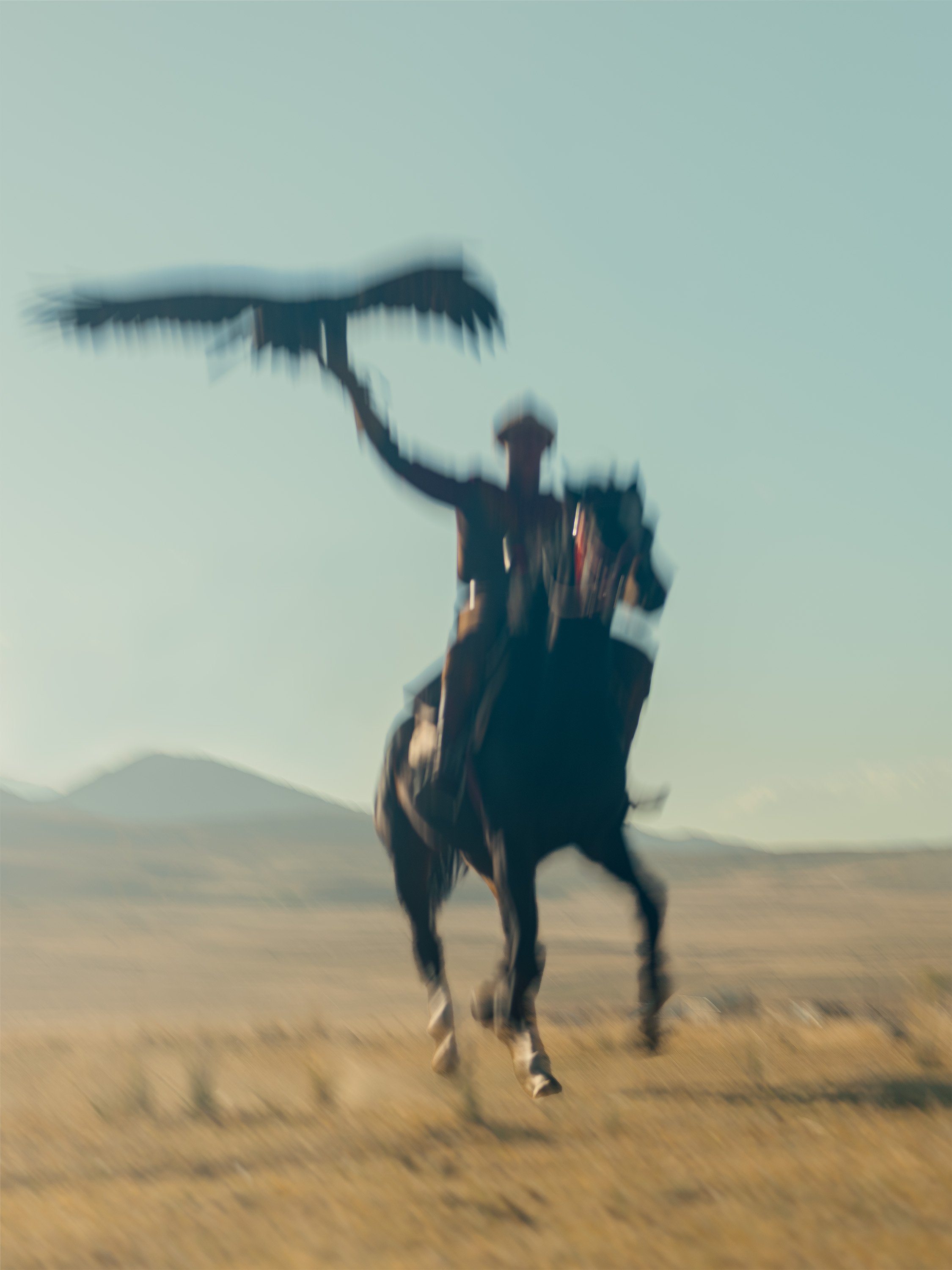
On another day, three other hunters joined him from nearby villages. Together they rode out across the plain, their eagles perched proudly on their gloved arms. Watching them move in formation, the birds still perched on the hunters gloved hand, their wings ready for flight, was breath taking! ”
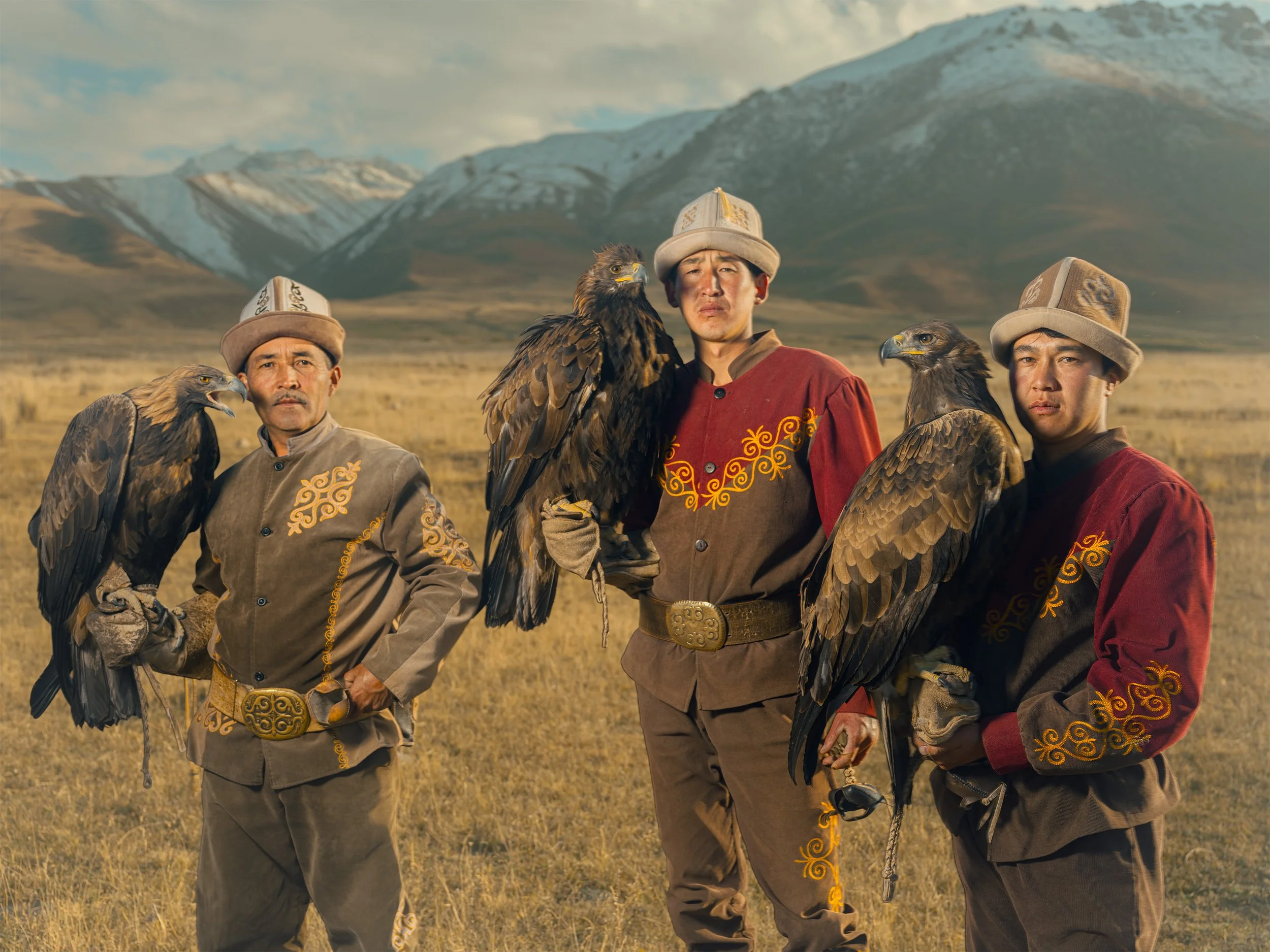
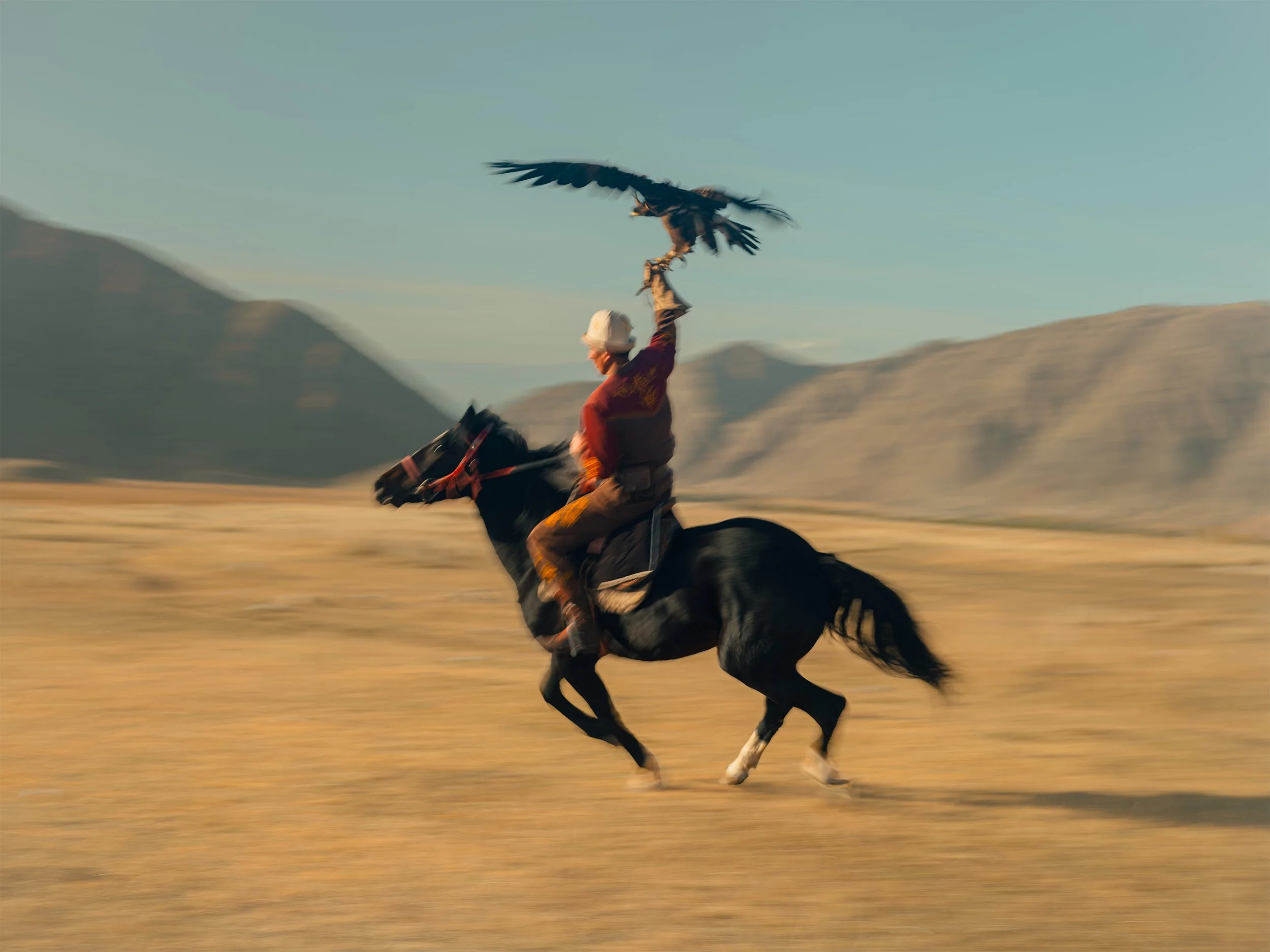
“Eagle hunting, or berkutchi, has been practiced across Central Asia for more than two thousand years. Hunters use their eagles to catch rabbits, foxes and even deer. The steppes are vast, stretching endlessly toward the horizon, with prey often hidden deep in the tall grass. Using a bow and arrow would be slow and exhausting, but an eagle is swift, precise and instinctive, its strike rate far higher. This partnership between man and bird is born of necessity as much as tradition, refined over generations by those who learned to survive in these harsh and open lands. It is believed to have originated among the nomadic tribes of the Altai Mountains and later spread westward. Some historians suggest that falconry and eagle hunting were introduced to Europe through returning crusaders and traders, influencing the noble hunting traditions of the medieval era.
This journey reminded me why I photograph. Beautiful landscapes and dramatic moments may draw us in, but it's the people, their traditions and their stories that stay with us. Spending time with Aito and his family reinforced my belief that photography can be a way of preserving cultures that are changing with every generation.